

Dollhouses have long been a favorite toy for children because they encourage creativity and imagination, as well as providing hours of fun. These small houses allow children to engage in imaginative play and act out real-life situations in a realistic, miniature setting. As dollhouses have evolved, so have the materials used to build them. Both wooden and plastic dollhouses are popular choices for parents, each with its own advantages and disadvantages.
This article will compare the two common types of dollhouse materials in terms of durability, safety, environmental impact, and overall value for your child. It will help guide you in choosing the best dollhouse for your child, whether you're looking for eco-friendly toys, durable toys for kids, or the safest option.
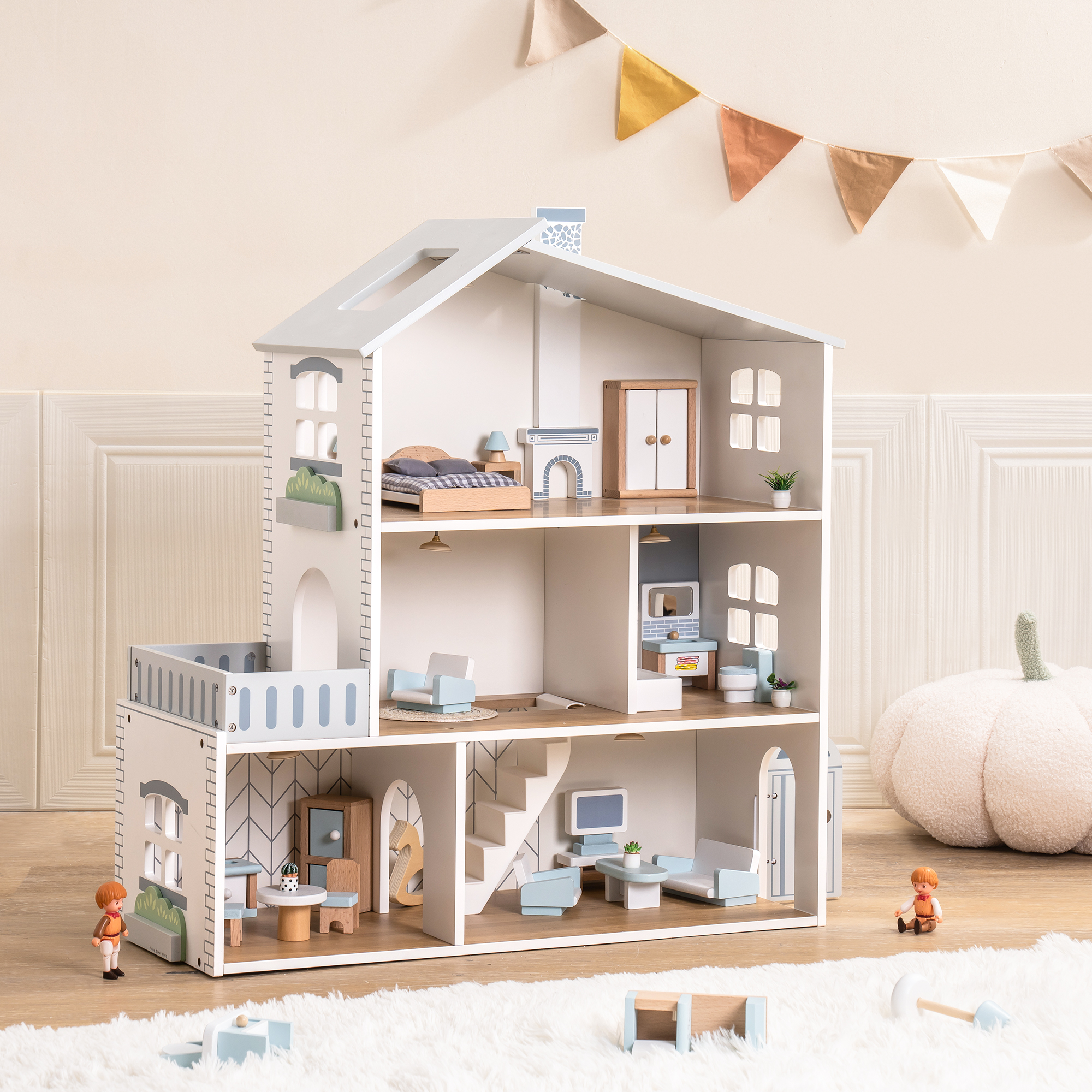
Why do children need dollhouses?
Dollhouses have been a childhood staple for generations. They offer more than just fun playtime. From role-playing and creative play to educational possibilities, these little houses open up a whole new world of options for your child. They help children work on fine motor skills, develop social skills, and understand spatial relationships as they play with their dolls through all sorts of scenarios. The material is the most important factor when choosing a dollhouse; only the right material can guarantee long-lasting play and your child's safety.
Wooden dollhouses: the classic option
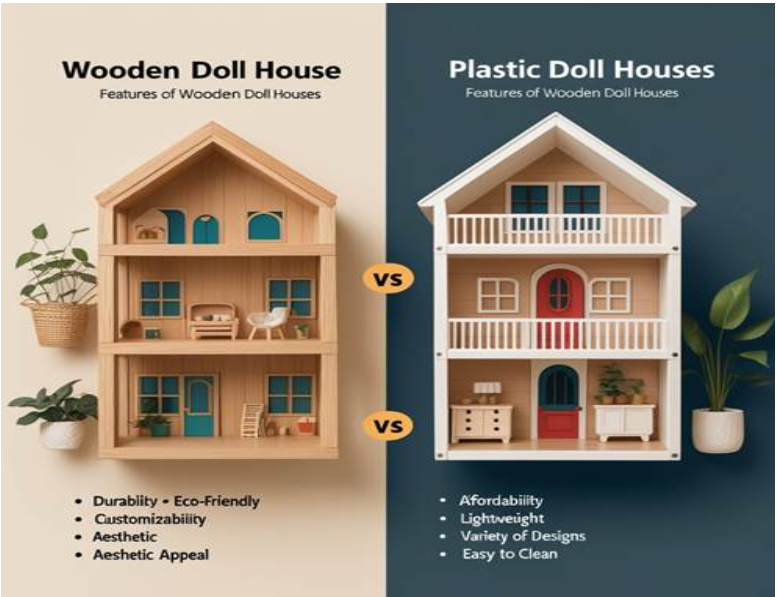
Wooden dollhouses have always been a favorite. They are beautiful and timeless. Made from natural wood, most kits are built like a real house, with miniature details and a sturdy frame. A wooden dollhouse offers many advantages, and durability is one of the most important. Wood is strong, and these houses can withstand years of rough play by children. Wooden dollhouses are often beautifully crafted and robust, making them visually appealing.
Main features of wooden dollhouses:
- Durability: Most wooden dollhouses are made to last a long time. Wood is strong, so the houses can withstand the occasional bump or fall. Wood will stand the test of time better than plastic (if properly maintained) and won't crack or warp over time. They are also a long-term investment, as wooden dollhouses can be passed down from generation to generation.
- Eco-friendly: In today's environmentally conscious world, parents are increasingly interested in eco-friendly toys. Wood is an eco-friendly material, meaning wooden dollhouses are sustainable. When sustainably sourced, wood is a renewable resource and can have a much smaller environmental impact than plastic. Wood is biodegradable, unlike plastic, which will remain in the environment for centuries. Many manufacturers are also using non-toxic paints and finishes, making them a better choice for younger children. Wooden dollhouses are an excellent option for families looking to reduce their environmental footprint.
- Personalization: You can personalize your wooden dollhouse and create any dollhouse plan you have in mind. You can paint or decorate the house according to your parents' and children's preferences, which is a personalization factor.
- Aesthetic appeal: A wooden dollhouse also has a classic, timeless, and aesthetically pleasing look and feel that appeals to those who appreciate the art of craftsmanship. These houses often resemble real-life dollhouses, built with realistic details, hardwood floors, and furniture. They are presented as more elegant and traditional, and their natural surfaces and custom options are said to provide a more impressive refinement. The best wooden dollhouses boast excellent craftsmanship, making them aesthetically pleasing to parents who appreciate beautiful things.
Disadvantages of wooden dollhouses:
- Price: Wooden dollhouses are generally more expensive than plastic ones. The price tag can also increase due to the high cost of wood and the time involved in crafting them.
- Weight: A wooden house can be heavy and complicated for small children to move around inside.
Plastic dollhouses: the modern alternative
Plastic dollhouses have become increasingly popular over the years, as advancements in modern manufacturing have enabled complex and customizable assembly processes. These houses are brightly colored and lightweight. They also boast modern features, made from durable plastic materials and bags, such as high-quality PVC, making them both lightweight and affordable.
Main features of plastic dollhouses :
- Affordability: Plastic dollhouses are primarily sold based on their price. Comparatively, plastic dollhouses also tend to be cheaper than wooden dollhouses, making them much more affordable for many people. They are also mass-produced, which helps keep the cost down. For families on a budget, plastic dollhouses can be an attractive option without sacrificing too much fun and creative playtime. Furthermore, plastic dollhouses are available in all sorts of styles and themes; you'll have plenty of options to choose from depending on your child's interests.
- Lightweight: Plastic dollhouses are easy for children to carry and move. This is especially helpful for younger children who are less able to maneuver heavier wooden models. Because plastic is unbreakable, it's also less likely to cause injury if dropped, making it safe and practical for younger children who wouldn't have been strong enough to carry heavier wooden dollhouses.
- Variety of designs: Plastic dollhouses come in various shapes and sizes, from simple models to intricate, multi-level houses. This variety translates into more options to suit different tastes and budgets.
- Durability: Plastic dollhouses don't quite match wood in weight, luxurious feel, or smell, but they are often just as durable. It's a fantastic quality plastic, so it won't easily break during rough play and is safe for children. Plastic dollhouses won't deteriorate, fade, or stain. Plastic is a great choice if you plan to keep the dollhouse outdoors or in a playroom, where it might be exposed to the elements. Because it's naturally tough, it can also withstand the wear and tear of spills, moisture, and rough play without aging quickly.
- Easy to clean: The plastic table surfaces can be easily wiped and disinfected, which is ideal for families with young children who tend to make a mess while playing.
Disadvantages of plastic dollhouses:
- Environmental impact: Unlike wood, plastic is not a renewable material. Plastic production has a significant environmental cost, which only worsens if the plastic is not recyclable. Plastic is not biodegradable and takes millions of years to decompose. Although some plastic dollhouses use recycled materials, they still pose an environmental problem in terms of pollution and waste.
- Not very aesthetically pleasing : Many plastic dollhouses are not nearly as cozy or have the traditional look of their wooden counterparts. Their bright colors and mass-produced appearance can make them seem less realistic.
- Risk of breakage: The plastic is tough, but it can crack or break if dropped from a height or subjected to a significant impact, which could become a problem over time.
Which dollhouse material is the most durable?
When it comes to durable toys for children , both wooden and plastic dollhouses have their advantages. A wooden dollhouse can be perceived as more durable in the long run than one made of other materials. On the other hand, plastic dollhouses can be more weather-resistant and handle spills or rough play better than wood in some cases.
- Verdict: A wooden dollhouse will generally last longer, but plastic dollhouses perform better outdoors.
Which dollhouse is safer?
When choosing between wooden and plastic dollhouses, safety should be your top priority. Each material has its own safety considerations:
- Wooden dollhouses tend to be safer because they don't have sharp edges and can't break into small pieces. But it's essential to look for non-toxic paints and finishes.
- Plastic dollhouses, in contrast, are lighter and won't shatter into dangerous fragments. However, they may have small, detachable parts that pose a choking hazard.
- Verdict: If they are well made and have non-toxic finishes, wooden dollhouses are generally safer for children.
Which dollhouse is best for the environment?
As an eco-friendly toy, the wooden dollhouse takes first place. As mentioned earlier, wood is a naturally biodegradable material (if harvested properly). It can be obtained sustainably most of the time. Plastic, in contrast, is a petroleum-based product that can take hundreds of years to decompose.
- Verdict: Wooden dollhouses are more environmentally friendly.
Which dollhouse is right for you?
To choose the best dollhouse for children, consider both your child's preferences and your own priorities. When it comes to buying a dollhouse as a parent, the choice between wooden and plastic dollhouses ultimately depends on your priorities.
Verdict: If you value ecology, durability, and timeless design, a wooden dollhouse might be the right choice for your child. But let's say you want a lightweight, affordable construction and a variety of modern designs. In that case, a plastic dollhouse might be a better option for your family.
When deciding, consider your child's age, the space you have for play, and your budget. Either option offers children the opportunity to engage in imaginative play. We recommend choosing a wooden dollhouse over a plastic one, but as long as it's good quality and safe, either will provide your child with years of fun.
Are you ready to make the best choice for your child? Whether you're looking for the best dollhouses for kids or considering eco-friendly toys, both wooden and plastic dollhouses offer unique benefits. Explore our premium range ofdollhousesand give your child a toy that promotes creativity and play.
